Saturday 10am-3pm
Wednesday 11am-3pm


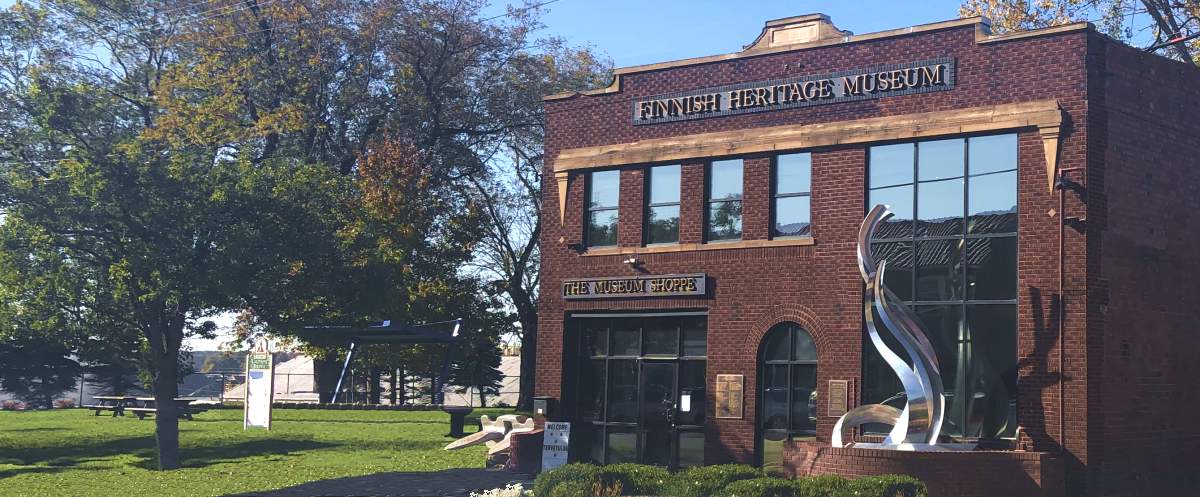
 When you think of genealogy, do you think of questions you want answered, verification of stories, find out where your ancestors are from, or all of those? At the Finnish Heritage Museum, we provide a service to our members and their families where they can begin their journey to find lost members of their families, follow the immigration trail, or just get to know their relatives a little bit better. So much plays into getting to know your family and there are many pitfalls available as you travel through time or perhaps place, but those of us who enjoy it, believe you will too.
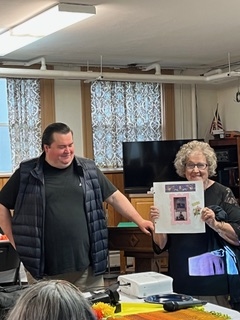
Our guest speaker for the September general program was Sebastian Norrdahl, who just so happens to be a neurosurgery resident physician here in Cleveland, Ohio. He started his genealogy journey in 2006. Born in Appleton, Wisconsin, he also holds dual Finnish/American citizenship. His father and mother were both from mostly Swedish-speaking communes. He also speaks Swedish as well as Finnish, which has been a great help to him as he has moved through his relatives’ records. To give context to his talk, he gave a short but informative history review from 9000 BC through 1809 AD. This highlighted the movement of borders, wars, and overall reasons for the architecture and spheres of influence in Finland today. Next he reminded us of places where we can gather important information regarding our families. There are muster rolls which sometimes included physical features of the soldier and the soldier’s origin, casualty records which don’t carry a lot of information, and naval records that are organized by ship and tend to be less user-friendly.
To do research on a specific ancestor, you need to gather some information if possible. What were that ancestor’s known names, and if possible, the parish from which he came. There are many searchable passenger lists available to get the immigration records, however these come with a caveat. Be very careful as this information may not be correct as the intake personnel may not have heard your ancestor correctly and written down the name incorrectly. Additionally, it was not mandatory to have surnames. You are looking for any information that will give you a trail. Are their parents’ names listed, did they come with other family, where did they depart, and what entry point into US did they land? Communion records may give you the year of departure for this person. Neither Swedish royalty nor females were often listed in the records as it was not mandatory. You will begin to build that relative’s family laterally. As you move through these records, you may come upon some stories. Sebastian shared some with us.
Jonas Tihinen was Sebastian’s great-great grandfather and was born in 1868 in Jämsä and moved to Sideby in 1890 to work as a blacksmith. Jonas’ two sons, Sigfrid and Martin (Sebastian’s great grandfather) split the Tihinen family into two halves. Their names became Nederland and Norrdahl as both grew up in Swedish culture. Luckily for Sebastian he speaks Swedish and was able to navigate between these languages. This led to Sebastian’s search for his Finnish relatives in Jämsä.
Now we know that DNA has changed the landscape of genealogy in many ways. As a result of DNA research, there is a genetic distinction among Finns, which divides eastern and western populations. The border of the 1323 Treaty of Nöteborg also appears to mark this divide.
Now we move to Isokyrö. Many of our members call Isokyrö home including our Program Coordinator. Here Priests and Painters are noted during this time period of 17th and 18th Centuries.
The Genealogy Sursilliana is one of the largest and most complete genealogies of Finnish families in existence. It all descendants of Erik Angerman “Sursill”, a wealthy farmer in 16th century Sweden whose children became the ancestors of many notable clergy families in Finland. Half of Finland’s presidents and Sebastian himself are related to him. It was this resource and Sebastian’s study of it that found his 9th great grandfather and the priest of Isokyrö from 1672-1712. He was born to a family of clergy and studied at Turku prior to serving as a chaplain in the Swedish army. Interestingly, he took over the role of priest from none other than his future wife’s grandfather, Isaac Brennerus. He was the priest there for 40 years and also interestingly through three marriages. A stroke in 1711 led to his death the following year. For a century after his death, his descendants, especially his grandson, told a false narrative that he was related to a former queen of Sweden. There is a painting in Isokyrö church of Israel Alftanus with his first two wives, Sofia Frisius and Susanna Eichmann, and their children, ca. 1695. Note that the women in white in the painting were painted in as they no longer were alive. It was in the 1550’s that Jacob Geet commissioned a number of wall paintings inside the church. Later Isaac Brennerus had all of them whitewashed as he was not a fan. Besides he was something of an artist himself. Jacob is Sebastian’s 13th great grandfather with Isaac Brennerus his 11th grandfather. Our genealogist and program coordinator, Anne Pohto, brought a picture of herself standing beneath that painting in the church with Israel and family.
For the last story of his family we move to “The Man in the Floor”. It was very common for people to be buried in graves in the floors of the churches during the Middle Ages through the early 1800’s. Of course, only those of high status were given this privilege. It might also be noted that throughout Europe the church floor would become overcrowded to which they would dig up the older bones and move them to make room for the new. The closer your tomb was to the altar the more prestigious you were considered.
Sebastian’s father came from Sideby, a small mostly Swedish-speaking town in southern Ostrobothnia. Here Sebastian discovered the name Reichenbach, a very odd sounding surname. Through his search of tax records and an article on the subject written many years before, Sebastian was able to learn how Germans ended up in rural Finland. Niclas Reichenbach is Sebastian’s 10th great grandfather. He went from being a wealthy man who founded a city in Finland but ended up poor as a farmer and innkeeper in Sideby. Poor investments had left him in ruin. Niclas can be credited with a large percentage of Sideby’s population having ancestral ties to the Reichenbachs. Sebastian found a book from the 18th century which had the name Elias Holmius, Niclas’s brother-in-law and a priest from 1634-1684. The book detailed Holmius’ tomb in the mid-1700s and gave a description of the corpse that had been preserved for a century in the ground. It also described his tomb as a stone sarcophagus inlaid within the floor of the Närpes church. And, the tombs of Elias Reichenbach and Agneta Berchelt were also written about in this book. Sebastian decided to check them out.
Sebastian details his journey so far and reminds us that genealogy is full of misinformation but he also shows us how to find the truth if it exists and to enjoy the stories. And of course, he reminds us that most likely we all have descended from someone famous - or perhaps infamous. If you haven’t started your own journey, here’s your encouragement to do so today.